Quick answer: In this industrial dataset, only the German Bionic Cray X has a battery: an 8-hour lithium-ion pack, 2-hour charge time, hot-swappable. The other four systems — Skelex 360, Comau MATE-XT, HeroWear Apex 2 and Levitate AIRFRAME — are passive and have no battery, so runtime is not applicable. For most buyers the real comparison is not battery life but whether you need active assistance at all.
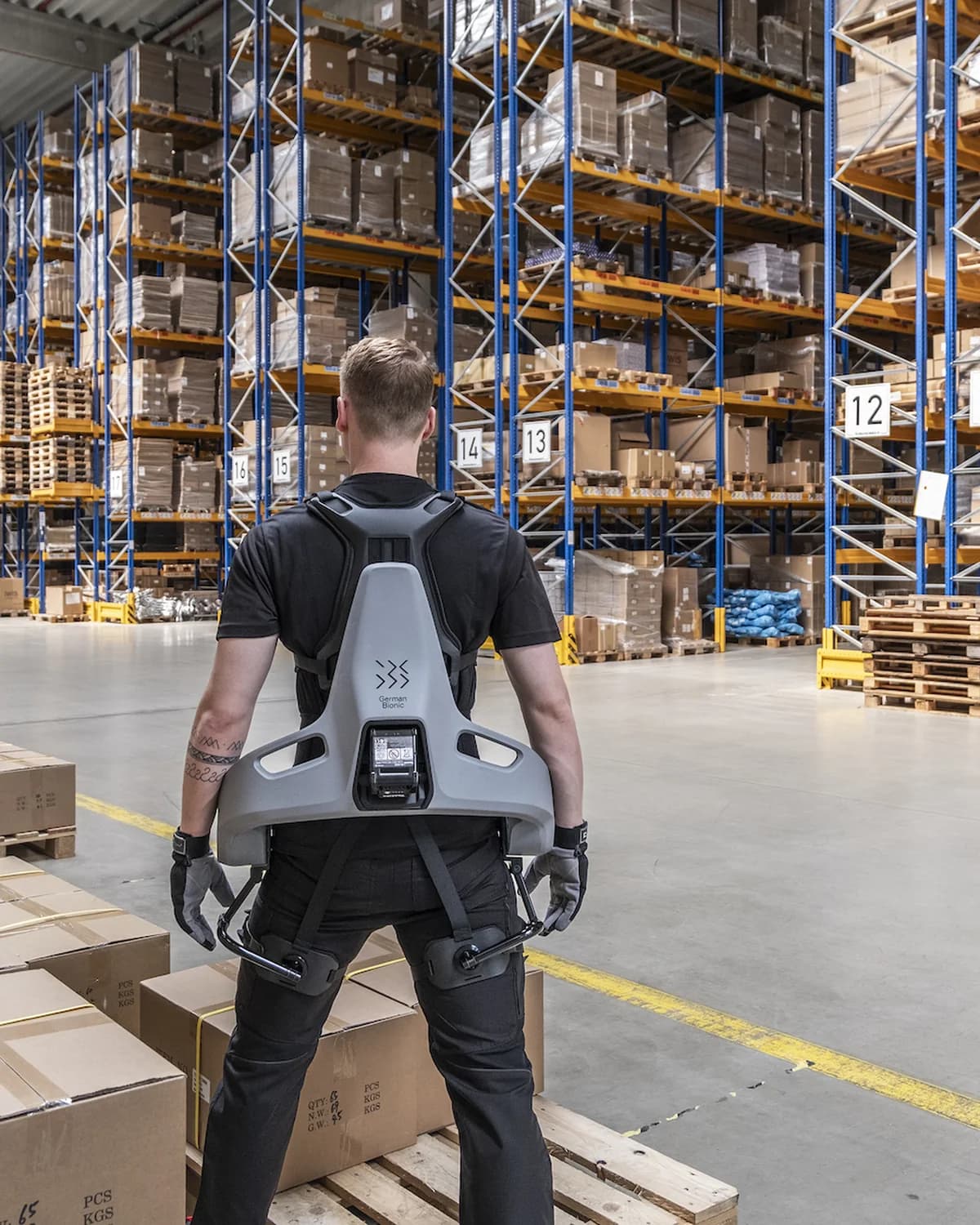
Battery life is the wrong first question for most industrial exoskeleton buyers. Of the five systems in the ExoSelect database, four are passive — no battery, no charging, no runtime. Only the German Bionic Cray X is active and powered, and its datasheet gives an 8-hour runtime with a 2-hour charge and a hot-swappable pack. That single fact reframes the comparison: you are not choosing between battery lives, you are choosing between a powered back exoskeleton and a set of passive shoulder and hip systems.
Key takeaways
- Only one of five industrial systems in the database has a battery: Cray X, 8 h runtime, 2 h charge, hot-swappable.
- The other four — Skelex 360, MATE-XT, Apex 2, AIRFRAME — are passive; battery life, charge time and battery chemistry are not applicable.
- Battery life is not the same as shift coverage: hot-swap and charging logistics determine uptime, and the database does not disclose cycle life or pack warranty.
- Passive systems avoid power infrastructure entirely, which matters for multi-site fleets and contractors.
- For overhead work, a passive shoulder exoskeleton is the documented fit; for lifting and forward bending, the powered Cray X is the only active option here.
The comparison table: what the database actually records
The table below uses only supplied specifications. Where a parameter is not applicable to a passive system, it is marked as such. No runtime, charge time or battery chemistry is inferred for passive devices.
| System | Maker | Drive | Battery type | Runtime | Charge time | Hot-swappable | Price from (USD) |
|---|
| Cray X | German Bionic | Active | Lithium-ion, hot-swappable | 8 h | 2 h | Yes | 9,900 |
| Skelex 360 | Skelex | Passive | Not applicable | Not applicable | Not applicable | Not applicable | 4,900 |
| MATE-XT | Comau | Passive | Not applicable | Not applicable | Not applicable | Not applicable | 5,900 |
| Apex 2 | HeroWear | Passive | Not applicable | Not applicable | Not applicable | Not applicable | 1,195 |
| AIRFRAME | Levitate Technologies | Passive | Not applicable | Not applicable | Not applicable | Not applicable | 2,950 |
Why only one system has a battery
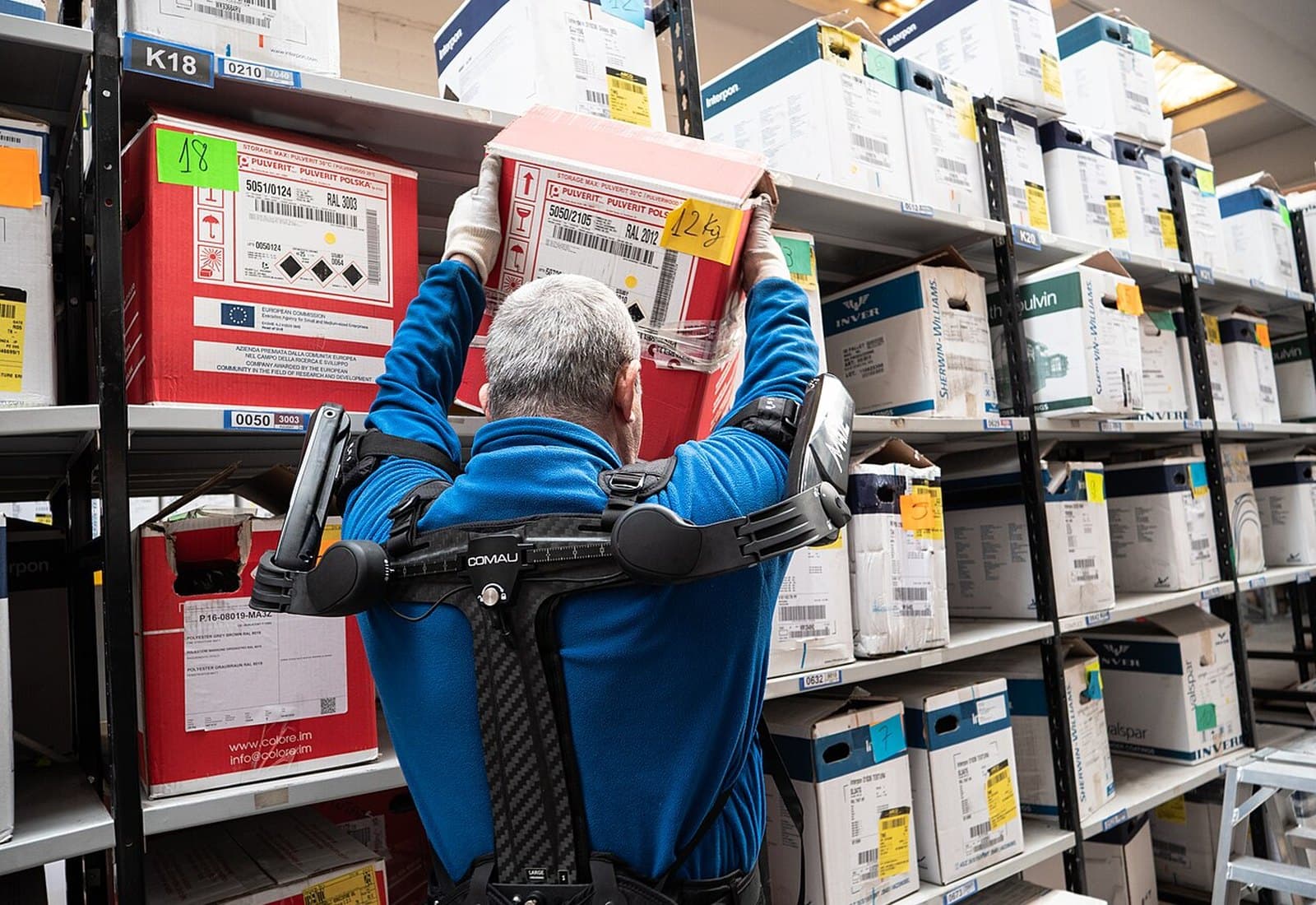
The Cray X is an active back exoskeleton: it uses load sensors and an IMU to deliver up to 300 N of assist force and 30 Nm of torque, with adaptive lift assistance and sit-to-stand support. That actuation requires power, hence the lithium-ion pack. The other four systems are passive: Skelex 360 and MATE-XT use springs and mechanical support for overhead work; Apex 2 uses elastic bands for hip extension; AIRFRAME uses mechanical shoulder support. None of them has sensors, connectivity or a battery in the supplied data.
This is not a defect in the passive systems. It is a design choice with procurement consequences: no chargers, no spare packs, no power infrastructure, no battery-replacement cycle. The trade-off is that passive systems cannot adapt assistance in real time the way an active system can.
What 8 hours of runtime actually means on site
Eight hours matches a standard shift on paper. In practice, runtime depends on duty cycle, assist level and ambient temperature — none of which the database records. The Cray X datasheet does list a 2-hour charge time and a hot-swappable pack, which is the more important operational fact: a spare pack plus a charging station can cover a multi-shift operation without taking the unit out of service. Buyers should ask for the number of packs per unit in a fleet quote, because the database does not disclose pack count, cycle life or battery warranty.
For passive systems, the equivalent question is wear-time comfort, not runtime. The database lists weights of 1.2 kg (Apex 2), 1.5 kg (AIRFRAME), 1.6 kg (Skelex 360) and 4.2 kg (MATE-XT). Those figures matter more than any battery spec for a passive device, because the user carries the system for the whole shift.
Total cost of ownership: battery vs no battery
The Cray X lists from 9,900 USD; the passive systems range from 1,195 USD (Apex 2) to 5,900 USD (MATE-XT). Battery ownership adds cost items the database does not price: spare packs, charging infrastructure, pack replacement and disposal. None of those are disclosed. A buyer comparing Cray X with a passive back-assist alternative should request a three-year battery service quote before treating the list price as the comparison basis. The ExoSelect compare tool can hold the documented specs side by side, but it will not fill in undisclosed battery economics.
What the datasheet doesn't tell you
Three gaps matter most for a battery-life comparison, and the database marks them explicitly rather than guessing.
- Cray X warranty: undisclosed. The database records warranty as undisclosed for the only powered system here. Without it, you cannot calculate the cost of pack replacement or the risk of an out-of-warranty battery failure. Ask German Bionic for the battery warranty term separately from the frame warranty.
- Battery cycle life and degradation: not disclosed. An 8-hour runtime is a new-pack figure. The database does not state capacity after 500 or 1,000 cycles, so runtime over a three-year fleet life is unknown. This is the single most important missing number for a fleet buyer.
- Passive systems: runtime not applicable, but wear-time data also missing. For Skelex 360, MATE-XT, Apex 2 and AIRFRAME, the database correctly marks battery parameters as not applicable. It does not supply measured wear-time or comfort data, so the passive alternative to battery life is also partly unquantified.
Two further unknowns affect deployment: Cray X lead time is 6–10 weeks, while Apex 2 is 2–4 weeks and MATE-XT 4–8 weeks. Battery logistics should be planned around that lead time, not after the unit arrives.
Who should not choose this
Do not choose the Cray X if your task is sustained overhead work. The database positions it for lifting, carrying and forward bending; the passive shoulder systems — Skelex 360, MATE-XT and AIRFRAME — are the documented fit for arm elevation. Buying a powered back exoskeleton for overhead assembly means paying for actuation and battery logistics you will not use.
Also do not choose any powered system if you operate across multiple contractor sites with no controlled charging infrastructure. The passive systems remove that constraint entirely. Conversely, do not choose a passive system if you need adaptive, sensor-driven assistance for lifting: the database shows no sensors or connectivity on the four passive units, and only Cray X offers load-sensor-driven adaptive assistance with cloud fleet telemetry.
FAQ
Which industrial exoskeleton has the longest battery life?
In this database, only the German Bionic Cray X has a battery, with an 8-hour runtime and 2-hour charge time. The other four systems are passive, so a battery-life ranking is not meaningful across the set.
Do passive exoskeletons need charging?
No. Skelex 360, Comau MATE-XT, HeroWear Apex 2 and Levitate AIRFRAME are passive; battery type, runtime, charge time and hot-swap are all recorded as not applicable.
Is a hot-swappable battery enough for multi-shift use?
The Cray X pack is hot-swappable and charges in 2 hours, which supports pack rotation. The database does not disclose pack count per unit, cycle life or battery warranty, so multi-shift coverage must be confirmed with the maker.
Next step
Before any quote, request one documented parameter from German Bionic: battery cycle life to 80% capacity, plus the battery warranty term. Then compare the Cray X against a passive back-assist option such as HeroWear Apex 2 on the compare page, or send your task profile to the ExoSelect selection desk for a documented gap check. For the full industrial set, start from the industrial exoskeleton category.
 ExoSelect research