Quick answer: If you are searching for a full-body industrial exoskeleton, the current market does not offer a single commercial system that supports the entire body. The closest match is the
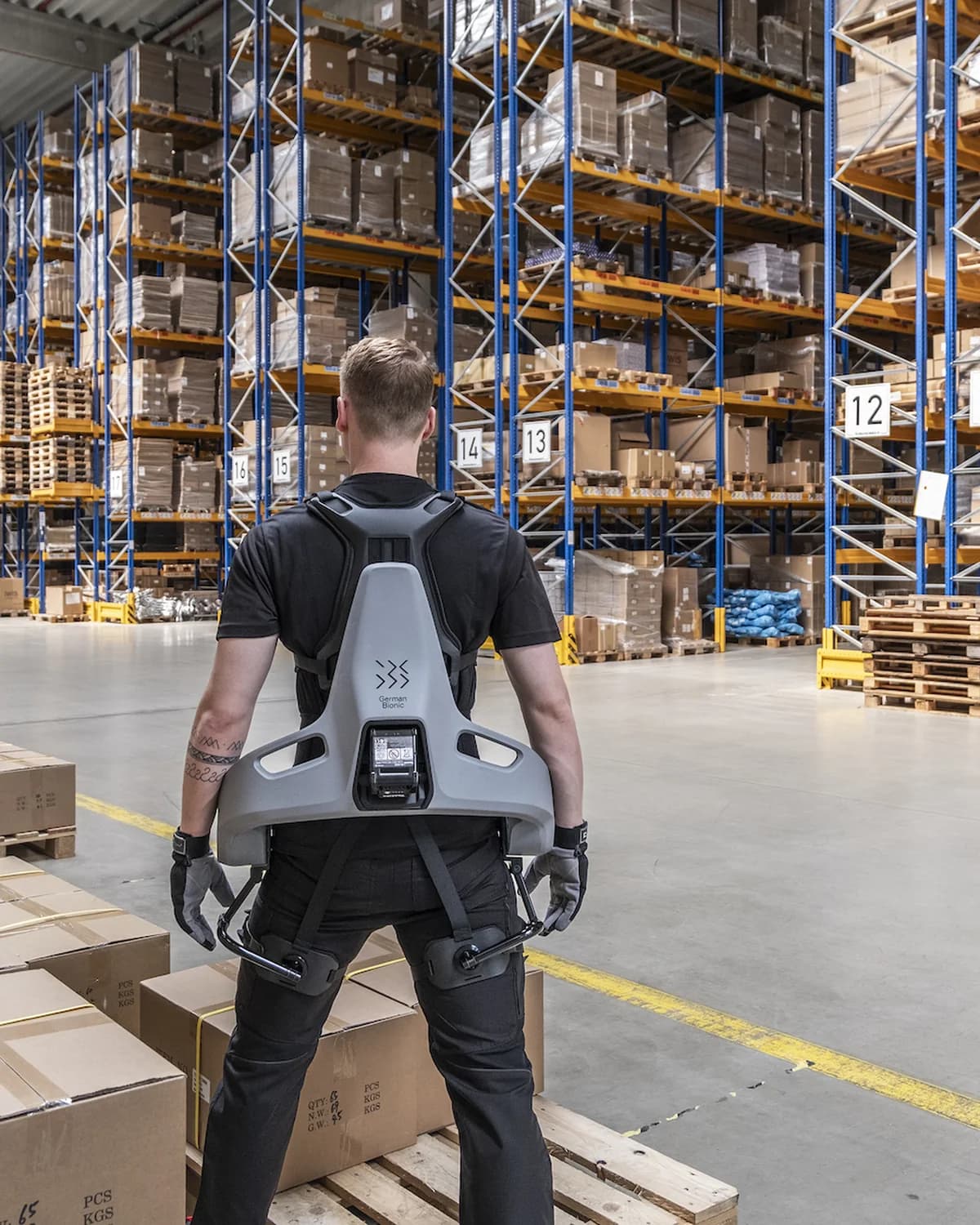
Cray X by German Bionic, an active back exoskeleton with 300 N assist force and 30 kg lift support, but it targets the lower back only. For full-body coverage, buyers must combine systems or wait for new products. This comparison covers the five industrial exoskeletons in the ExoSelect database and highlights where the data is missing for full-body evaluation.
Key takeaways
- No full-body industrial exoskeleton is listed in the ExoSelect database; all systems assist specific body regions.
- Cray X is the only active system, offering 300 N assist force, 30 kg lift support, and a 7.6 kg weight.
- Passive systems (Skelex 360, MATE-XT, Apex 2, AIRFRAME) are lighter and cheaper but provide targeted support only.
- Warranty is undisclosed for Cray X and MATE-XT, and unknown for AIRFRAME; only Skelex 360 (24 months) and Apex 2 (12 months) disclose it.
- Certifications vary: Cray X and MATE-XT carry CE and ISO 13482; Skelex 360 and Apex 2 carry CE only; AIRFRAME carries CE only.
- Lead times range from 2–4 weeks (Apex 2) to 6–10 weeks (Cray X); Skelex 360 and AIRFRAME require contacting the maker.
Comparison table: industrial exoskeletons in the database
All specifications below are taken directly from the ExoSelect DATABASE JSON. Missing values are marked as Unknown or Not disclosed.
| System | Maker | Drive | Weight | Assist force | Lift support | Price from (USD) | Certifications | Warranty | Lead time |
|---|
| Cray X | German Bionic | Active | 7.6 kg | 300 N | 30 kg | 9,900 | CE, ISO 13482 | Undisclosed | 6–10 weeks |
| Skelex 360 | Skelex | Passive | 1.6 kg | 70 N | 5 kg | 4,900 | CE | 24 months | Contact maker |
| MATE-XT | Comau | Passive | 4.2 kg | 100 N | 5 kg | 5,900 | CE, ISO 13482 | Undisclosed | 4–8 weeks |
| Apex 2 | HeroWear | Passive | 1.2 kg | 220 N | 20 kg | 1,195 | CE | 12 months | 2–4 weeks |
| AIRFRAME | Levitate Technologies | Passive | 1.5 kg | 60 N | 5 kg | 2,950 | CE | Unknown | Contact maker |
Why there is no full-body industrial exoskeleton (yet)
The term “full-body exoskeleton” is often used loosely. In industrial settings, it usually means a system that supports the back, shoulders, and legs simultaneously. None of the systems in the ExoSelect database meet that definition. The Cray X, for example, is a powered back exoskeleton that assists lifting and forward bending; it does not support the arms or legs. Passive systems like Skelex 360 and MATE-XT are upper-limb exoskeletons focused on shoulder support. Apex 2 is a soft exosuit for hip extension, and AIRFRAME is a shoulder-support exoskeleton. Buyers seeking full-body assistance must either combine multiple devices or wait for new products. This gap is critical for procurement planning: budgeting for a single full-body unit is not feasible with current commercial offerings.
Active vs passive: what the specs reveal
Cray X is the only active system in the database. Its 300 N assist force and 30 kg lift support are significantly higher than any passive system. However, it weighs 7.6 kg and requires a battery (8 h runtime, 2 h charge time, hot-swappable). Passive systems are lighter (1.2–4.2 kg) and have no batteries, but their assist forces range from 60 N to 220 N. The trade-off is clear: active systems offer greater force but impose weight and power-management burdens. For full-body support, an active system might be necessary, but no such product exists in our data.
Certification and compliance differences
Only Cray X and MATE-XT carry ISO 13482 certification, which is the safety standard for personal care robots. Skelex 360 and Apex 2 carry CE marking but do not reference ISO 13482 in the database. AIRFRAME carries CE only, and its standards are unknown. For buyers in regulated environments, ISO 13482 may be a requirement. Note that CE marking alone does not guarantee compliance with ISO 13482; buyers should request the declaration of conformity. The database does not include EN 614-1 for any system except Cray X, which lists it alongside ISO 13482.
What the datasheet doesn't tell you
Several critical parameters are missing from the database, and their absence matters for full-body evaluation:
- Warranty for Cray X and MATE-XT: Undisclosed. Without warranty terms, total cost of ownership cannot be calculated. A 24-month warranty (as on Skelex 360) versus an undisclosed term can swing a procurement decision.
- Standards for AIRFRAME and Apex 2: Unknown. AIRFRAME lists only CE, and Apex 2 does not reference any standard. Buyers cannot verify compliance with ISO 13482 or other relevant norms.
- Clinical evidence for Skelex 360 and AIRFRAME: Unknown. While industrial exoskeletons are not medical devices, evidence of injury reduction or productivity gains is often requested. The database does not provide this for these two systems.
- Max walking speed and stair/slope capability: Not applicable for all systems. This means these exoskeletons are not designed for mobility tasks; they are for stationary or semi-stationary work. For full-body use, mobility is often expected, so this is a significant limitation.
- Battery and connectivity for passive systems: Not applicable, which is expected. But for active systems like Cray X, battery life is 8 h, yet real-world runtime under load is not disclosed.
These gaps mean buyers cannot fully assess lifecycle cost, compliance, or performance without requesting additional documentation from makers.
Who should not choose this
If you need a true full-body exoskeleton for tasks requiring simultaneous back, shoulder, and leg support, none of these systems are suitable. Do not choose Cray X if your primary need is overhead work—it provides no shoulder assistance. Do not choose Skelex 360 or MATE-XT if you need lifting support for the back; they are shoulder-focused. Apex 2 is for hip extension only, and AIRFRAME for shoulder support. Buyers with mixed tasks should consider a multi-device strategy or wait for integrated full-body products. Also, if ISO 13482 certification is mandatory, avoid AIRFRAME and Apex 2, as their compliance is not confirmed.
Procurement next steps
To move forward, request a documented warranty term and a declaration of conformity for Cray X and MATE-XT. For a full-body approach, compare the Cray X with the Apex 2 to cover back and hip assistance, but note they are separate devices. Use our comparison tool to evaluate up to four systems side by side. For tailored advice, contact the ExoSelect selection desk. Browse the industrial exoskeleton category for more systems.
FAQ
Is there a full-body exoskeleton for industrial use?
No. The ExoSelect database does not list any industrial exoskeleton that supports the entire body. Current systems target specific regions: back (Cray X), shoulders (Skelex 360, MATE-XT, AIRFRAME), or hips (Apex 2).
Which industrial exoskeleton has the highest assist force?
Cray X, with 300 N assist force and 30 kg lift support. It is also the only active system in the database.
What is the warranty on Cray X?
The warranty for Cray X is undisclosed in the database. Buyers should request this information directly from German Bionic.
Sources: Manufacturer websites: German Bionic, Skelex, Comau, HeroWear, Levitate Technologies. Specifications from ExoSelect DATABASE JSON.
 ExoSelect research