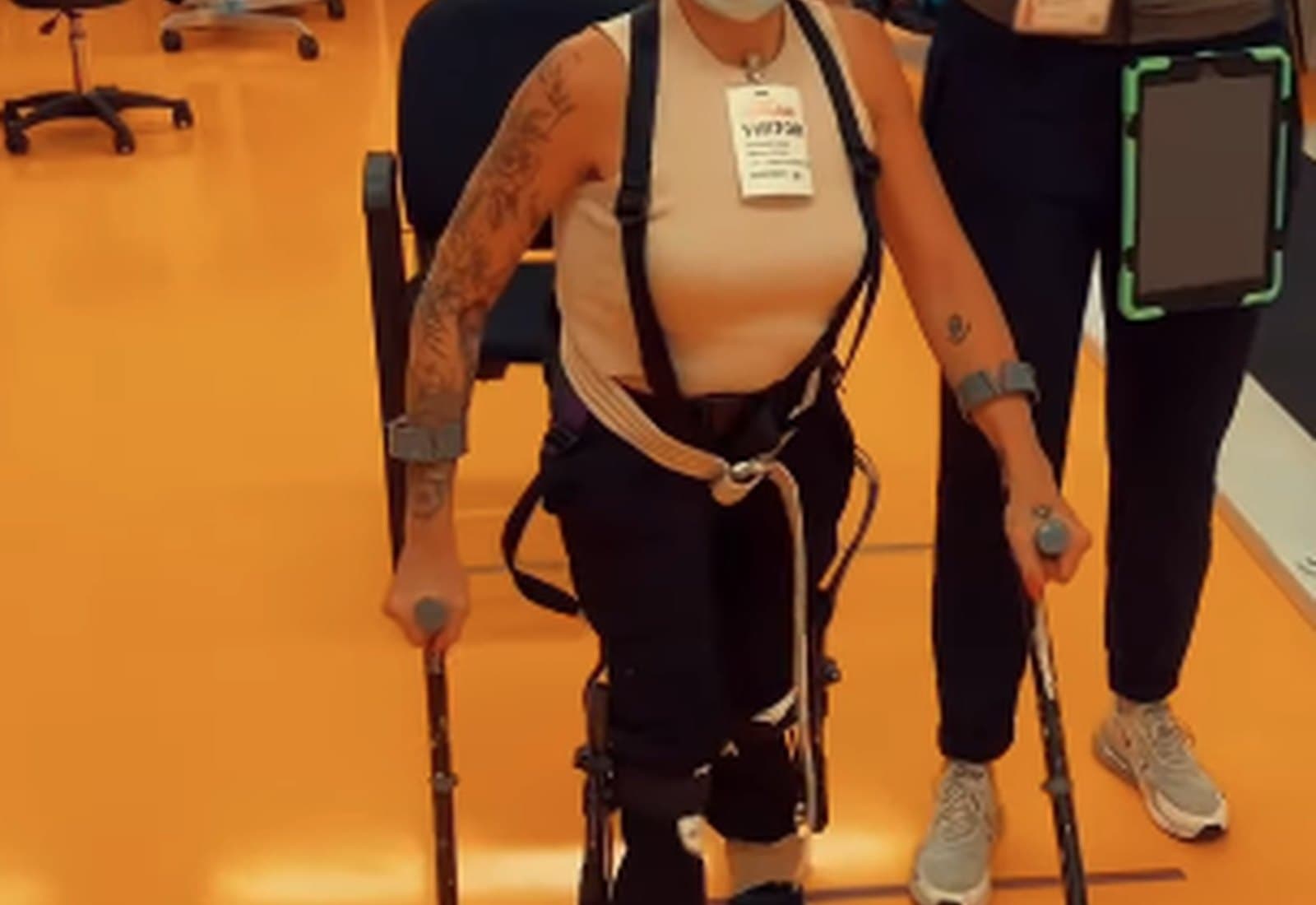
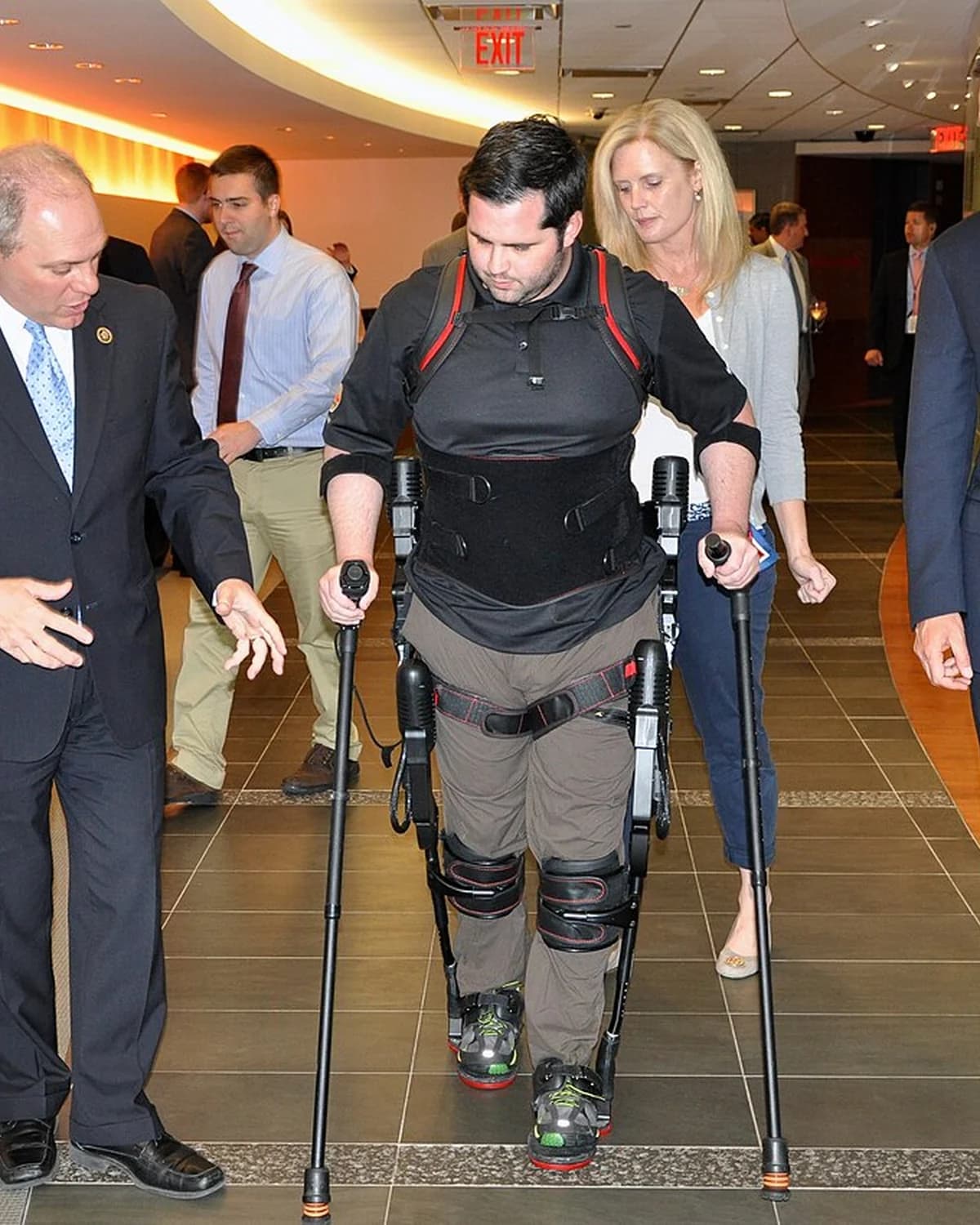
Quick answer: The Indego is a modular, active lower-limb exoskeleton from Parker Hannifin for clinical gait training and personal mobility. It weighs 12.3 kg, supports users up to 113 kg and 155–195 cm tall, reaches 2 km/h, and runs 4 hours on a swappable lithium-ion battery. It holds FDA and CE marks and is available in North America and Europe on inquiry. Pricing is undisclosed and must be quoted regionally.
The Indego is a strong candidate when you need a lightweight, modular powered exoskeleton for supervised gait training or personal mobility, with documented FDA and CE certification. It is less suitable if your programme requires stair negotiation, published assist torque figures, or a transparent capital price before commitment. This spotlight uses the ExoSelect database to separate what Parker Hannifin publishes from what a buyer must verify directly.
Key takeaways
- Indego is one of the lightest active medical exoskeletons in the dataset at 12.3 kg, which matters for therapist handling and transport between rooms.
- User weight limit is 113 kg, the highest among the compared systems, but height range stops at 195 cm.
- Peak assist force and peak assist torque are undisclosed or unknown; these are critical for matching patient impairment levels.
- Warranty is 12 months; service and training contracts are not detailed in the datasheet.
- Price is undisclosed and described as dependent on regional reimbursement and configuration.
What the Indego datasheet actually specifies
Parker Hannifin lists the Indego as a modular lower-limb exoskeleton built from carbon fibre and aluminium. The modular hip, thigh and shank sizes are a practical advantage for clinics fitting multiple patients, though the datasheet does not state how many discrete sizes exist or the adjustment range per segment. The system offers four degrees of freedom, two control modes (intuitive movement and therapist-controlled gait), and joint position and force sensors. Connectivity includes Bluetooth and session data logging, which supports billing and outcome reporting. The battery is lithium-ion, swappable, and charges in 2.5 hours. Certifications are FDA and CE, with the standard IEC 60601-1 cited. Clinical evidence is described as peer-reviewed gait training studies, but no specific study names or endpoints are given in the database.
Indego versus other active medical exoskeletons
The table below uses only specifications present in the ExoSelect database. Where a value is missing, it is marked Unknown or Not disclosed.
| Specification | Indego (Parker Hannifin) | EksoNR (Ekso Bionics) | HAL Lower Limb (Cyberdyne) | Atalante X (Wandercraft) |
|---|
| Weight | 12.3 kg | 23.6 kg | 17 kg | 65 kg |
| User weight limit | 113 kg | 100 kg | 100 kg | 100 kg |
| Height range | 155–195 cm | 152–193 cm | 145–190 cm | 145–190 cm |
| Speed | 2 km/h | 1.1 km/h | 1.5 km/h | 2.5 km/h |
| Degrees of freedom | 4 | 4 | 2 | 12 |
| Assist torque | Unknown | 40 Nm | 40 Nm | Unknown |
| Battery life | 4 h | 4 h | 3 h | 4 h |
| Charge time | 2.5 h | 2.5 h | 2 h | 3 h |
| Certifications | FDA, CE | FDA, CE | CE medical, ISO 13485 | CE medical |
| Lift support | Not applicable | Not applicable | Not applicable | 80 kg |
| Price | Undisclosed | Undisclosed | Undisclosed | Undisclosed |
Indego stands out for its low weight and high user weight limit. It is the only system in this set with a 113 kg capacity, which may suit a broader patient demographic. However, it lacks the published 40 Nm assist torque of EksoNR and HAL, and it does not offer the 12 degrees of freedom or 80 kg lift support of Atalante X. The trade-off is clear: Indego prioritises portability and modular fitting over maximum assistive force or multi-joint support.
What the datasheet doesn't tell you
Three parameters are missing or unverified in the database, and each has direct procurement consequences.
- Peak assist force (undisclosed): Without this figure, you cannot match the device to patients with different levels of muscle weakness. A higher assist force may be necessary for acute rehabilitation, while a lower force might suffice for maintenance. Ask Parker Hannifin for the force curve across gait phases.
- Peak assist torque (unknown): Torque is the rotational equivalent and is often the headline number in clinical literature. EksoNR and HAL publish 40 Nm; Indego does not. This makes direct comparison of assistive capability impossible from public data. Request the torque specification at the hip and knee joints.
- Indicative price (undisclosed): The database notes that regional reimbursement and configuration determine the final price. This means the capital cost could vary significantly between North America and Europe, and between clinical and personal mobility configurations. Budget holders need a quoted range before shortlisting. Use the inquiry form to request a documented price band from the maker or a regional distributor.
Additionally, the datasheet does not specify the number of modular sizes, the adjustment increments, or the maximum user weight for each configuration. These details affect fitting time and patient throughput. The warranty is 12 months, but service level agreements, spare parts availability and training costs are not listed. Lead time is described as "contact regional distributor", which introduces uncertainty for planned deployments.
Who should not choose this
Do not choose the Indego if your clinical protocol requires stair training or if you need documented assist torque to satisfy internal biomechanical review. The datasheet states that sit-to-stand and level walking are supported, with clinical assessment required for stairs, and it does not publish torque. If your patients regularly exceed 195 cm in height, the Indego will not fit, whereas EksoNR covers up to 193 cm and HAL up to 190 cm, so neither is better for very tall users. If you need a system that provides lift support for sit-to-stand transfers, the Indego is rated not applicable, while Atalante X offers 80 kg. Finally, if you require a fixed capital price before board approval, the undisclosed pricing and regional variability make Indego a harder sell than a system with a published list price, though none in this dataset disclose prices.
Selection notes for procurement
Start with patient anthropometry. The Indego covers 155–195 cm and up to 113 kg, which is a wider weight range than the other systems here. If your caseload includes heavier patients, Indego is the only option in this set. Next, consider the therapy model. The two control modes (intuitive movement and therapist-controlled gait) suggest it can be used for both active-assisted and passive training, but the datasheet does not quantify the assistance levels. Ask for a demonstration of the therapist interface and the session data logging export format. Battery swapping is supported, and 2.5-hour charge time means a spare battery can keep a clinic running through a full day. The 12.3 kg weight is light enough for one therapist to transport, but check the carry handle and folding mechanism if you plan to move between rooms. Certifications are FDA and CE, which covers North America and Europe; if you are in Asia-Pacific, confirm local registration, as the regions listed are only North America and Europe. For a side-by-side comparison with other systems, use the comparison tool.
Total cost of ownership considerations
The database does not disclose price, training costs, service contracts or spare parts pricing. This is a significant gap for total cost of ownership modelling. The 12-month warranty is standard across the systems compared, but what happens after 12 months is unknown. The swappable battery is a plus, but the cost of additional batteries is not listed. Clinical evidence is described as peer-reviewed gait training studies, but without specific citations, you cannot assess the strength of evidence for your patient population. Request the list of publications and the endpoints measured. Also ask about the availability of loaner units during service, as downtime can disrupt therapy schedules.
FAQ
What is the maximum user weight for the Indego?
113 kg, according to the ExoSelect database. This is the highest among the active medical exoskeletons compared here.
Does the Indego support stair climbing?
The datasheet states sit-to-stand and level walking are supported, with clinical assessment required for stairs. It does not claim stair training as a standard feature.
Is the Indego available in Asia-Pacific?
The regions listed are North America and Europe. Availability in Asia-Pacific is not disclosed; contact Parker Hannifin for regional registration status.
For a direct comparison with the EksoNR, see the EksoNR product page. To evaluate the Indego against other medical exoskeletons, visit the medical exoskeleton category page. To request a documented torque specification or a price band, use the inquiry form and ask for the peak assist torque at the hip and knee, the number of modular sizes, and the post-warranty service contract terms.
 ExoSelect research