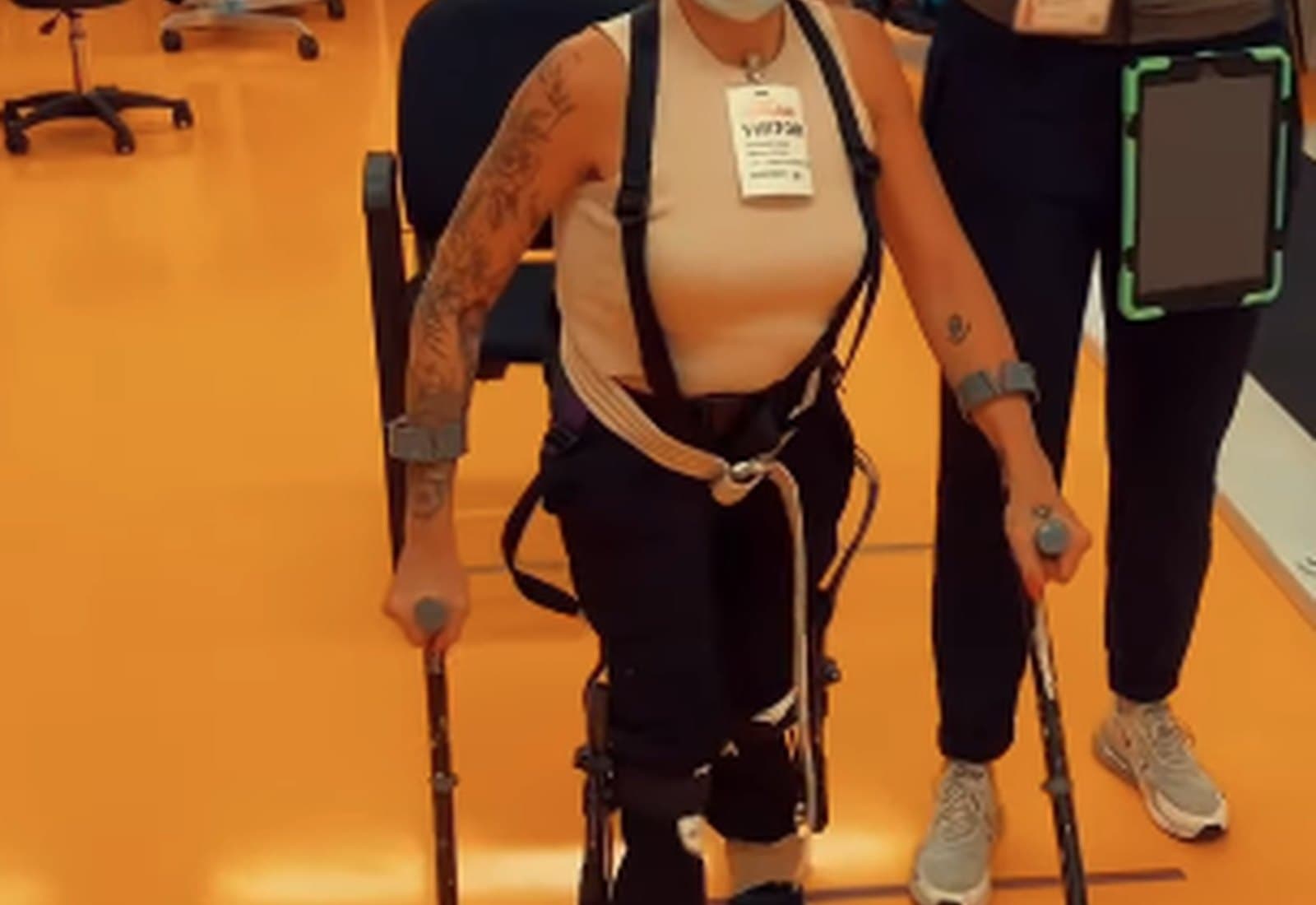
Quick answer: Overground gait training exoskeletons are active or hybrid lower-limb systems that support therapist-supervised walking on level ground and ramps. For procurement, the key decision is not the headline weight or speed but whether the vendor discloses peak assist force, torque, lift support and price—parameters that remain undisclosed or unknown for most systems in this database.
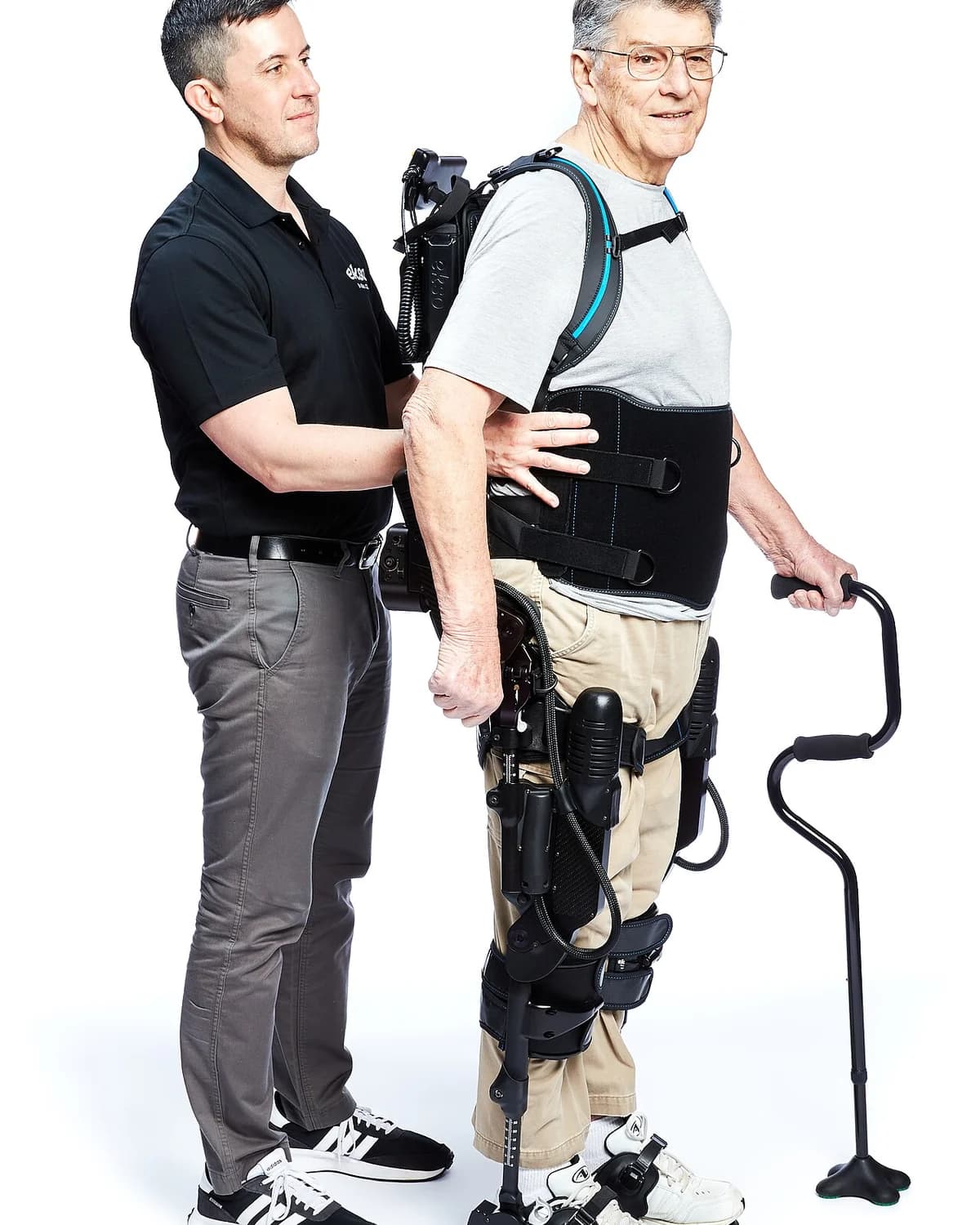
Overground gait training exoskeletons are powered or hybrid lower-limb devices used in neurorehabilitation to help patients practise walking over ground under therapist supervision. This FAQ answers the procurement questions that datasheets rarely address: which specifications are actually disclosed, which are missing, and how those gaps affect your purchase decision.
Key takeaways
- Only Atalante X discloses rated lift support (80 kg); EksoNR, HAL Lower Limb, Indego and ExoMotus M4 list it as not applicable or do not provide it.
- Peak assist force is undisclosed for all five systems; peak assist torque is disclosed only for EksoNR (40 Nm) and HAL Lower Limb (40 Nm).
- Indicative price is undisclosed for every system—budget must be built from quoted configurations, not list prices.
- Certification differs by region: EksoNR and Indego carry FDA and CE; HAL Lower Limb carries CE medical and ISO 13485; Atalante X carries CE medical; ExoMotus M4 carries NMPA and CE.
- Lead times range from 8–12 weeks (EksoNR) to programme-dependent (HAL Lower Limb) or contact-maker (Atalante X, Indego, ExoMotus M4).
What is overground gait training, and which exoskeletons support it?
Overground gait training means walking practice on level ground, ramps or slopes rather than on a treadmill. All five systems in this database support level walking; EksoNR and Atalante X explicitly support ramps or slopes. Stair training is not supported by EksoNR or Atalante X; Indego, HAL Lower Limb and ExoMotus M4 require clinical assessment for stairs. The relevant systems are EksoNR (Ekso Bionics), HAL Lower Limb (Cyberdyne), Atalante X (Wandercraft), Indego (Parker Hannifin) and ExoMotus M4 (Fourier Intelligence).
Comparison table: disclosed specifications
| System | Drive | Weight | Speed | Assist torque | Lift support | Battery life | Certifications |
|---|
| EksoNR | Active | 23.6 kg | 1.1 km/h | 40 Nm | Not applicable | 4 h | FDA, CE |
| HAL Lower Limb | Hybrid | 17 kg | 1.5 km/h | 40 Nm | Not applicable | 3 h | CE medical, ISO 13485 |
| Atalante X | Active | 65 kg | 2.5 km/h | Unknown | 80 kg | 4 h | CE medical |
| Indego | Active | 12.3 kg | 2 km/h | Unknown | Not applicable | 4 h | FDA, CE |
| ExoMotus M4 | Active | 23.5 kg | 1.2 km/h | Unknown | Not applicable | 3 h | NMPA, CE |
All values from ExoSelect database; “Unknown” means the maker does not disclose the figure.
What the datasheet doesn't tell you
Three parameters are consistently missing or unverified across this dataset, and each changes the procurement calculus:
- Peak assist force (undisclosed for all five systems). Without this figure you cannot match device capability to patient impairment level or compare therapeutic intensity across vendors. It is the single most important missing number for clinical buyers.
- Peak assist torque (disclosed only for EksoNR and HAL Lower Limb at 40 Nm; unknown for Atalante X, Indego and ExoMotus M4). Torque determines how much hip and knee support the device can deliver; the absence of a figure for three systems makes like-for-like comparison impossible without a direct request.
- Indicative price (undisclosed for all five). Every system is quoted by the maker or regional distributor. Budgeting therefore requires a formal quote, and total cost of ownership—training, service, consumables—is not published. For a structured cost framework, see our comparison tool.
Two further gaps matter for deployment: HAL Lower Limb is offered as a lease or treatment programme rather than a capital purchase, which changes the accounting treatment; and lead times are only specified for EksoNR (8–12 weeks), with the others listed as programme-dependent or contact-maker.
Who should not choose this
Do not choose a system from this group if your procurement requires a published capital price, a disclosed peak assist force, or a fixed lead time before contract signature. None of the five vendors discloses price or peak assist force, and only EksoNR publishes a lead time. If your clinic needs stair training, exclude EksoNR and Atalante X outright—both state stairs are not supported. If you need a light device for mobile or home-adjacent use, Atalante X at 65 kg is a fixed installation, not a portable unit; Indego at 12.3 kg is the lightest in this set. If you operate in North America and require FDA clearance, HAL Lower Limb (CE medical, ISO 13485) and ExoMotus M4 (NMPA, CE) do not carry FDA in this dataset. Buyers who cannot accept undisclosed torque should restrict shortlisting to EksoNR or HAL Lower Limb until the other makers provide documented figures.
How do certification and regional compliance differ?
Certification is not uniform. EksoNR and Indego hold FDA and CE, covering North America and Europe. HAL Lower Limb holds CE medical and ISO 13485 but is listed for Japan, Europe and Asia-Pacific—not North America. Atalante X holds CE medical and is listed for Europe and North America. ExoMotus M4 holds NMPA and CE and is listed for Asia-Pacific, Europe and the Middle East. All five cite IEC 60601-1; Atalante X additionally cites ISO 13482. Confirm that the specific configuration you order carries the mark required in your jurisdiction—the database lists system-level certifications, not configuration-level ones.
What clinical evidence is available?
The database records published stroke and spinal cord injury rehabilitation studies for EksoNR, clinical studies in stroke, SCI and neuromuscular conditions for HAL Lower Limb, clinical studies in neurological rehabilitation for Atalante X, peer-reviewed gait training studies for Indego, and clinical rehabilitation studies in China for ExoMotus M4. These are evidence categories, not outcome claims. Buyers should request the underlying publications and check patient populations, comparator groups and follow-up periods before treating any of them as procurement evidence.
How should buyers structure the evaluation?
Start with the parameters that are disclosed: weight, speed, battery life, certifications and height/user weight ranges. Then issue a documented parameter request for the three unknowns—peak assist force, peak assist torque (where unknown) and price—to every shortlisted vendor. Use the EksoNR product page and the Indego product page as reference points because they carry the most complete disclosed datasets in this group. Compare battery swap and charge time against your daily patient throughput: EksoNR and Indego both offer 4 h battery life and 2.5 h charge with swappable batteries; HAL Lower Limb offers 3 h and 2 h charge; Atalante X offers 4 h and 3 h charge; ExoMotus M4 offers 3 h and 2 h charge. For a full category view, see the medical exoskeleton category.
FAQ
Which overground gait training exoskeleton discloses the most specifications?
EksoNR and HAL Lower Limb each have a completeness score of 92 in the database, the highest in this group. Both disclose assist torque (40 Nm), weight, speed, battery and certifications; neither discloses peak assist force or price.
Can I get a price before requesting a quote?
No. Indicative price is undisclosed for all five systems. EksoNR, Atalante X and ExoMotus M4 are quoted by the maker or regional distributor; Indego pricing depends on regional reimbursement and configuration; HAL Lower Limb is often offered as a lease or treatment programme.
Which systems support stair training?
None of the five lists stair training as supported. EksoNR and Atalante X state stairs are not supported; Indego, HAL Lower Limb and ExoMotus M4 require clinical assessment for stairs. Overground gait training in this dataset means level ground and, for EksoNR and Atalante X, ramps or slopes.
Next step
Request a documented peak assist force and peak assist torque figure from Ekso Bionics, Cyberdyne and Wandercraft before you shortlist, and use the ExoSelect inquiry desk to log which vendors respond with numbers versus which defer to a sales call. That single comparison will tell you more about a vendor's procurement transparency than any brochure.
 ExoSelect research