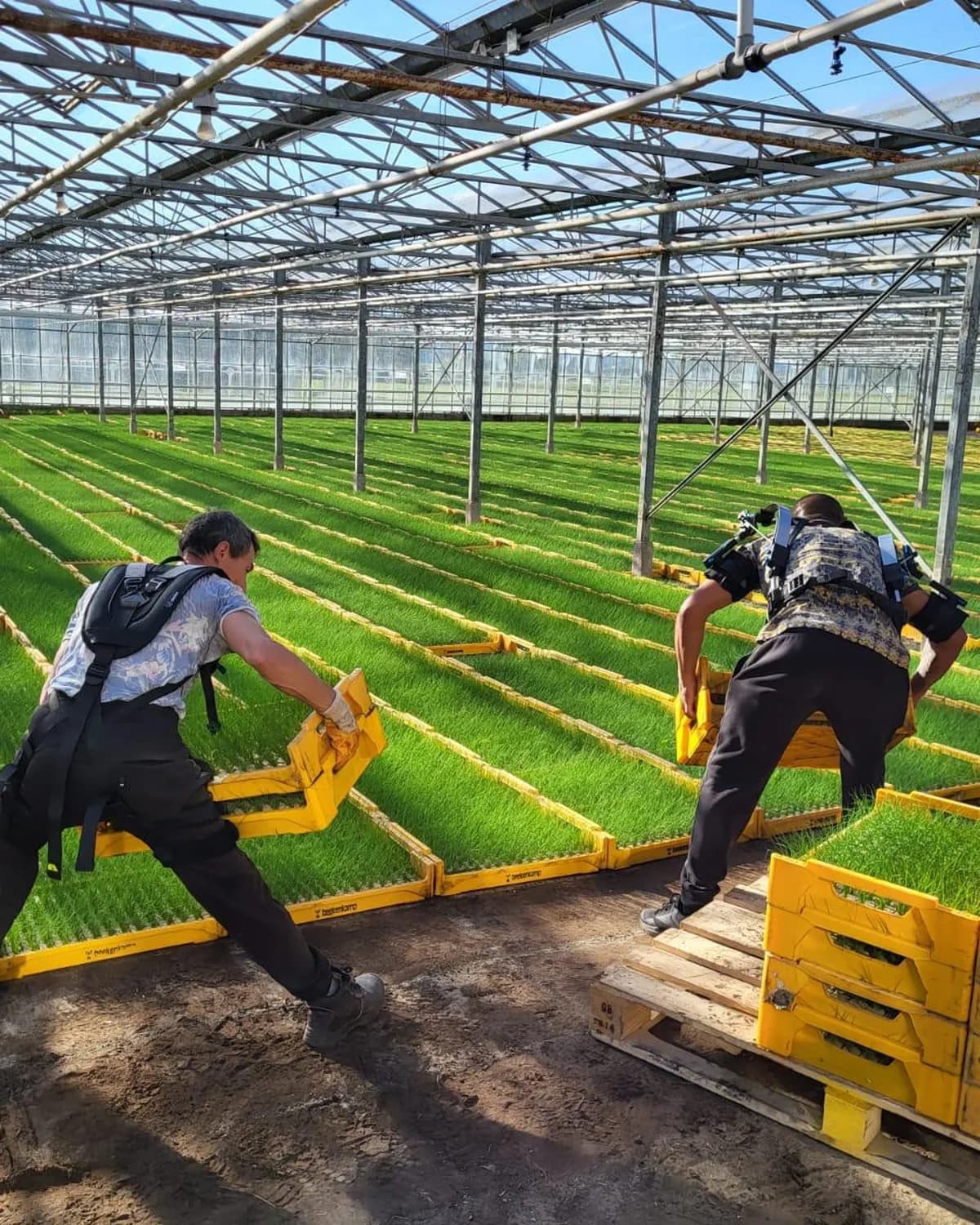
Quick answer: Exoskeleton ROI is calculated as (avoided injury and lost-time cost + productivity gain − total ownership cost) ÷ total ownership cost, but only if you use documented price and specification data. For industrial systems, the capital price ranges from $1,195 for Apex 2 to $9,900 for Cray X, and undisclosed warranty and service terms often decide the result more than the headline price.
How to build an exoskeleton ROI calculation
Start with the documented capital price, then add the costs the datasheet does not show. The database lists indicative list prices: Apex 2 at $1,195, AIRFRAME at $2,950, Skelex 360 at $4,900, MATE-XT at $5,900 and Cray X at $9,900. Those are starting points, not quotes. German Bionic states that fleet pricing and service contracts are negotiated; Skelex says the final quote depends on configuration and training; Comau notes configuration and quantity affect the quote. Build the model on the quoted price, not the list price.
The numerator has two parts. First, avoided injury and lost-time cost. Second, productivity gain from reduced fatigue or faster task completion. Neither is in the database. You must supply your own site data: incident rate, average days lost, loaded hourly cost and task duration. Do not import vendor claims as facts. The only defensible ROI is one built on your own operational numbers plus the documented product parameters below.
The following table uses only specifications supplied in the ExoSelect database. It is not a ranking. It shows which parameters are documented and which are unknown, because the unknown parameters are where ROI models usually fail.
| System | Maker | Drive | Weight | Assist force | Lift support | Price from | Warranty | Connectivity |
|---|
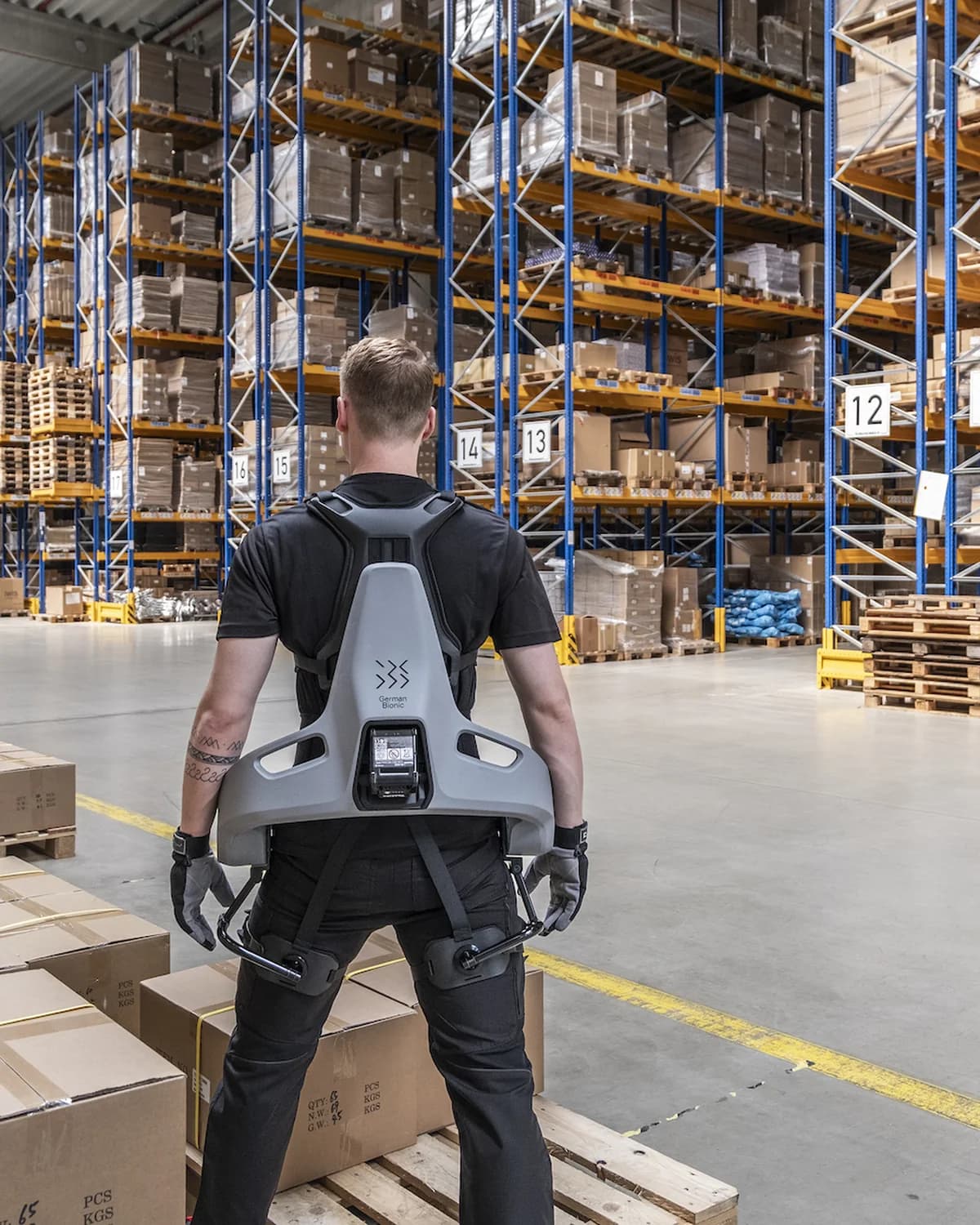
| Cray X | German Bionic | Active | 7.6 kg | 300 N | 30 kg | $9,900 | Undisclosed | Cray Visor app, cloud fleet dashboard, Bluetooth |
| Skelex 360 | Skelex | Passive | 1.6 kg | 70 N | 5 kg | $4,900 | 24 months | Not applicable |
| MATE-XT | Comau | Passive | 4.2 kg | 100 N | 5 kg | $5,900 | Undisclosed | Not applicable |
| Apex 2 | HeroWear | Passive | 1.2 kg | 220 N | 20 kg | $1,195 | 12 months | Not applicable |
| AIRFRAME | Levitate Technologies | Passive | 1.5 kg | 60 N | 5 kg | $2,950 | Unknown | Not applicable |
Two documented trade-offs matter for ROI. First, assist force and weight move together in this dataset: Cray X offers 300 N but weighs 7.6 kg, while Apex 2 offers 220 N at 1.2 kg. Higher assist may reduce fatigue on heavy lifting, but the heavier device can increase wearer burden and change task feasibility. Second, only Cray X documents connectivity and usage telemetry. If your ROI depends on measuring utilisation per shift, that is a documented differentiator, not a marketing claim.
Total cost of ownership beyond the list price
The database gives indicative list prices and some lead times: Cray X 6–10 weeks, MATE-XT 4–8 weeks, Apex 2 2–4 weeks. Skelex 360 and AIRFRAME list lead time as contact maker. Lead time affects the payback period because benefits start only after deployment. Add training, fitting, replacement parts, cleaning and storage. Skelex notes that final quote depends on configuration and training, which confirms training is a priced line item, not a free add-on. For Cray X, hot-swappable lithium-ion batteries with 8 h life and 2 h charge time are documented, so battery rotation and charging infrastructure are real costs. For passive systems, battery chemistry, runtime and charge time are not applicable, so those costs drop out.
Warranty is the largest undisclosed cost driver. Skelex 360 documents 24 months and Apex 2 documents 12 months. Cray X and MATE-XT list warranty as undisclosed. AIRFRAME lists warranty as unknown. A three-year ROI model that assumes no out-of-warranty repair cost is not defensible for those three systems until the maker confirms coverage in writing.
What the datasheet doesn't tell you
Three missing parameters decide most industrial ROI cases. First, warranty for Cray X, MATE-XT and AIRFRAME is undisclosed or unknown. Warranty length changes the maintenance line in years two and three and can swing the payback calculation more than a 10% price discount. Second, standards referenced for Apex 2 and AIRFRAME are unknown. Cray X, Skelex 360 and MATE-XT document CE and ISO 13482; Apex 2 documents CE but no standard is listed, and AIRFRAME documents CE with standards unknown. If your procurement gate requires a named standard, you cannot clear those two systems on the current record. Third, clinical evidence is unknown for Skelex 360 and AIRFRAME and not applicable for the others. For industrial buyers this is usually acceptable, but if your safety committee asks for evidence of injury reduction, the database does not supply it for any system, so your own pilot data must fill that gap.
Also missing: service contract pricing, spare-part pricing, and utilisation data for every passive system. Only Cray X documents usage telemetry. For the four passive systems, you cannot measure actual wear time from the device, so your ROI model must rely on supervisor logs or time studies.
Who should not choose this
Do not build an ROI case on list price alone for Cray X, MATE-XT or AIRFRAME. If finance requires a three-year total cost of ownership with documented warranty, those three systems are the wrong starting point until the maker provides written warranty terms. Do not choose an active system such as Cray X if your task is sustained overhead work with light tools: the documented 7.6 kg weight and 30 kg lift support target lifting and forward bending, while Skelex 360, MATE-XT and AIRFRAME are documented for overhead and precision work at 1.6 kg, 4.2 kg and 1.5 kg respectively. Conversely, do not choose a passive shoulder system for heavy lifting where 30 kg lift support is required; the passive systems document 5 kg to 20 kg lift support. Finally, if your site requires a named standard beyond CE, exclude Apex 2 and AIRFRAME from the shortlist until standards are confirmed.
Key takeaways
- Use quoted prices, not list prices: Apex 2 $1,195, AIRFRAME $2,950, Skelex 360 $4,900, MATE-XT $5,900, Cray X $9,900 are indicative only.
- Warranty is documented only for Skelex 360 (24 months) and Apex 2 (12 months); Cray X and MATE-XT are undisclosed and AIRFRAME is unknown.
- Only Cray X documents usage telemetry and fleet connectivity, which matters if ROI depends on measured utilisation.
- Assist force and weight trade off: Cray X 300 N at 7.6 kg versus Apex 2 220 N at 1.2 kg.
- Standards are unknown for Apex 2 and AIRFRAME; do not assume ISO 13482 compliance.
Frequently asked questions
What is a realistic payback period for an industrial exoskeleton?
The database does not contain payback data, injury rates or labour costs, so no defensible payback period can be stated. Build payback from your own incident and productivity data plus a quoted price and confirmed warranty.
Can I calculate ROI without a warranty figure?
Only if you model out-of-warranty repair as an explicit cost. For Cray X, MATE-XT and AIRFRAME the warranty is undisclosed or unknown, so request written terms before finalising the model.
Which system has the most complete ROI data?
Cray X has the highest completeness score in the database (96) and is the only system documenting connectivity, telemetry and battery rotation. That does not make it the best choice; it makes its cost model easier to defend.
Next step
Request the undisclosed warranty terms in writing from German Bionic, Comau and Levitate Technologies, then compare the documented specifications side by side on our comparison tool and review the Cray X, Skelex 360 and Apex 2 product pages. If you need a neutral read on which system fits your task profile, contact the ExoSelect selection desk.
Sources
 ExoSelect research