Quick answer
The H-WULF is a passive waist-assist exoskeleton made by ULS Robotics, priced indicatively from 3,600 USD, with a 3.8 kg frame, 30 kg lift support and CE marking, available in Asia-Pacific. It suits logistics operations in that region that need a low-cost, unpowered back-assist device for repeated lifting, but buyers must confirm peak assist force, warranty and lead time, none of which ULS Robotics discloses in the datasheet.
What the H-WULF is and who it is for
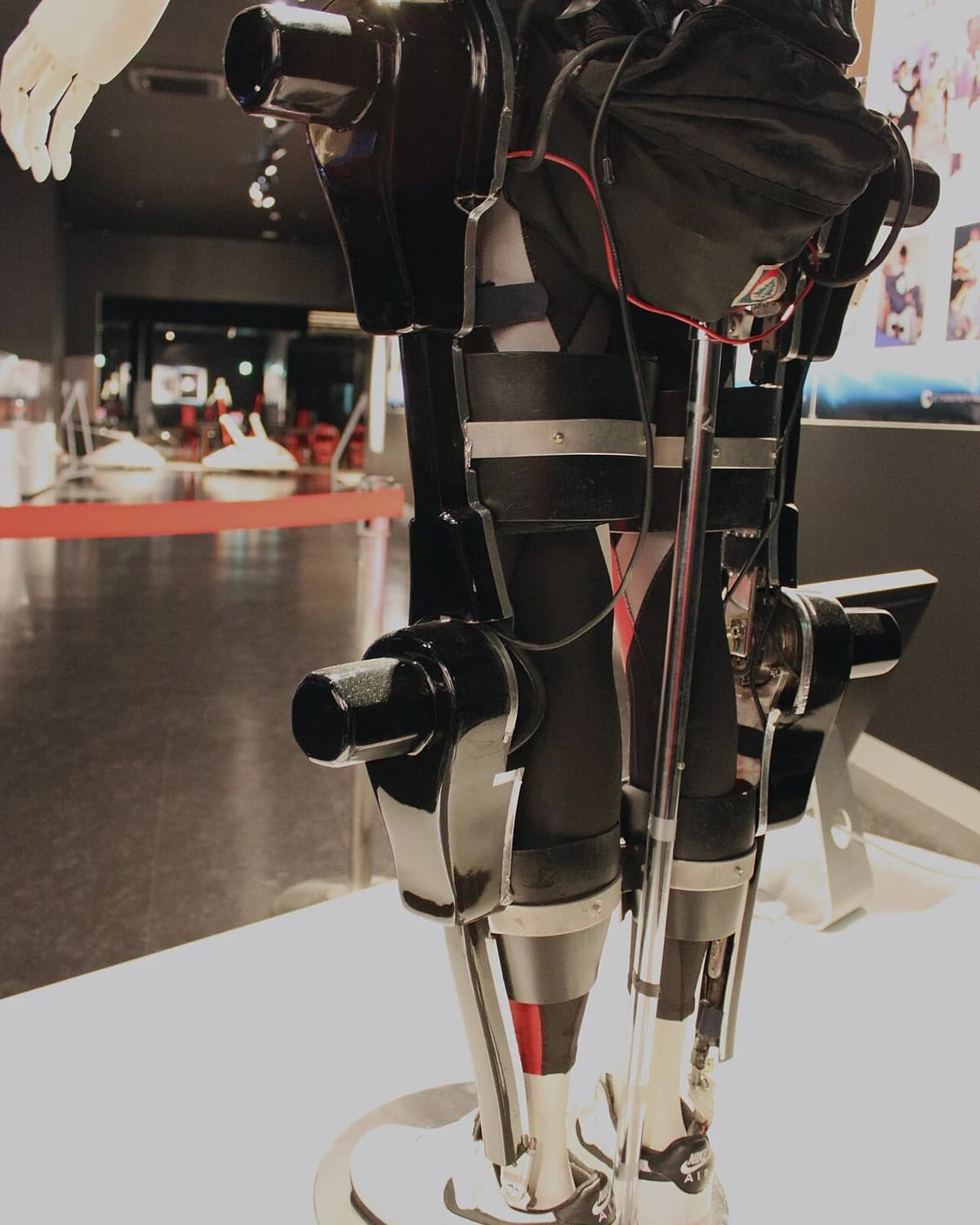
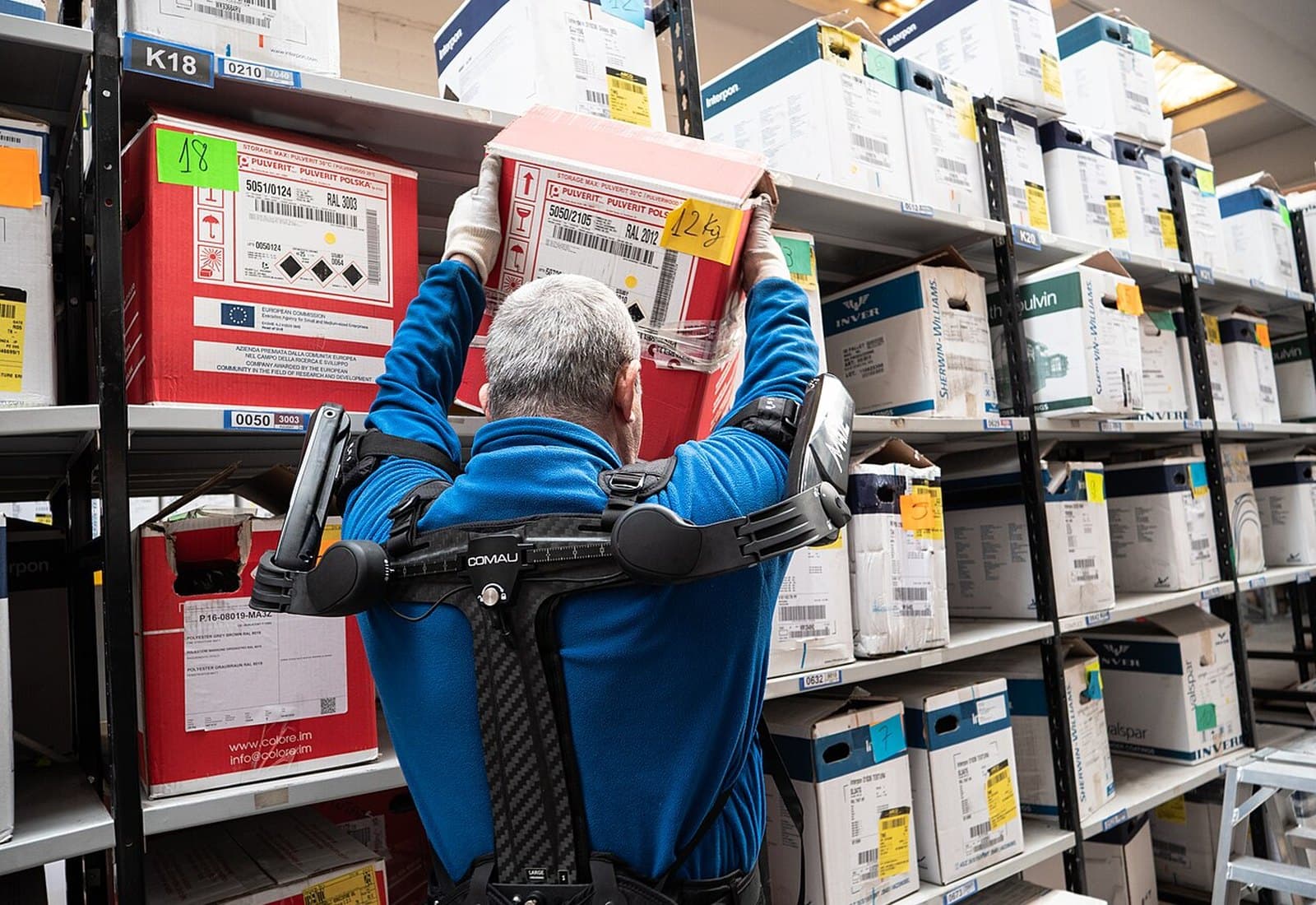
The H-WULF is a passive exoskeleton in the logistics category, designed for repeated lifting in warehouses and plants. ULS Robotics builds it from aluminium and steel, with an adjustable size range covering users from 160 to 190 cm and a maximum user weight of 100 kg. It has zero degrees of freedom in the powered sense, no sensors and no battery: assistance comes from passive waist mechanics, not actuators. That makes it a candidate for operations that want a simple, low-maintenance device rather than a connected exosuit.
Commercial intent here is straightforward: procurement teams comparing passive waist-assist systems for warehouse picking, pallet handling and line-side replenishment. The H-WULF competes on price and simplicity, not on data transparency or connectivity. For a broader view of the category, see the logistics exoskeleton category page.
H-WULF specifications at a glance
| Parameter | H-WULF (ULS Robotics) |
|---|
| Drive | Passive |
| Weight | 3.8 kg |
| Height range | 160–190 cm |
| Max user weight | 100 kg |
| Sizes | Adjustable |
| Materials | Aluminium, Steel |
| Degrees of freedom | 0 |
| Lift support | 30 kg |
| Control modes | Passive waist assistance |
| Sensors | None |
| Certifications | CE |
| Indicative price | 3,600 USD |
| Availability | Available on inquiry |
| Regions | Asia-Pacific |
All figures are from the ExoSelect database record for the H-WULF product page. The price is indicative and should be confirmed with ULS Robotics, including regional certification and service terms.
Key takeaways
- The H-WULF is a passive waist-assist exoskeleton with a 30 kg lift support rating and a 3.8 kg frame.
- It is CE marked but only listed for Asia-Pacific; European or North American deployment needs explicit confirmation.
- Peak assist force, peak assist torque, warranty and lead time are not disclosed by ULS Robotics.
- At 3,600 USD indicative, it is a low-cost entry point, but total cost of ownership depends on unknown service and warranty terms.
- It is not a connected device: no sensors, no data, no battery. Buyers wanting fleet telemetry should look elsewhere.
Selection notes: where the H-WULF fits
The H-WULF fits operations that want a mechanical waist-assist device with minimal infrastructure. Because it has no battery and no sensors, there is no charging, no firmware, no connectivity and no data privacy review. For a warehouse in Asia-Pacific with repeated lifting tasks and a workforce within the 160–190 cm and 100 kg limits, it is a plausible first passive device.
The 30 kg lift support figure is the headline number, but it is not the same as peak assist force or torque. Those two parameters are unknown in the database. A buyer comparing the H-WULF with active systems such as the SafeBoost by Verve Motion or the CLOi SuitBot by LG Electronics should treat the 30 kg as a support rating, not a measured biomechanical reduction. For a direct specification comparison, use the ExoSelect compare tool.
Comparison table: H-WULF vs documented alternatives
| Spec | H-WULF | SafeBoost | CLOi SuitBot |
|---|
| Maker | ULS Robotics | Verve Motion | LG Electronics |
| Drive | Passive | Active | Active |
| Weight | 3.8 kg | 2.2 kg | 5.5 kg |
| Lift support | 30 kg | 15 kg | 30 kg |
| Assist force | Unknown | 80 N | Unknown |
| Assist torque | Unknown | Unknown | 25 Nm |
| Battery life | Not applicable | 8 h | 4 h |
| Connectivity | Not applicable | Cloud dashboard, fleet telemetry, Bluetooth | Unknown |
| Certifications | CE | CE | Unknown |
| Standards | Unknown | ISO 13482 | Unknown |
| Price | 3,600 USD indicative | Undisclosed (subscription) | Undisclosed |
| Regions | Asia-Pacific | North America, Europe | Asia-Pacific |
The table shows a clear trade-off: the H-WULF offers higher lift support than the SafeBoost (30 kg vs 15 kg) at a lower indicative price, but it is passive, has no connectivity and is region-limited. The SafeBoost is lighter, connected and has a documented 80 N assist force, but its price is undisclosed and it is offered as a subscription. The CLOi SuitBot matches the 30 kg lift support and adds active torque, but its certification and standards are unknown.
What the datasheet doesn't tell you
Three missing parameters should block a purchase order until ULS Robotics answers them in writing.
Peak assist force and peak assist torque are unknown. The 30 kg lift support rating does not tell a biomechanist how much moment the device actually offloads at the lumbar spine. Without those figures, you cannot compare the H-WULF to the SafeBoost's 80 N or the CLOi SuitBot's 25 Nm, and you cannot model expected reduction in peak lumbar load. Ask ULS Robotics for a test report or a stated assist curve.
Warranty and lead time are unknown. A 3,600 USD indicative price is only the acquisition cost. If the warranty is short or the lead time is long, the total cost of ownership rises through downtime and spare parts. The database lists availability as "available on inquiry", which is not a lead time. For a multi-site rollout, ask for standard warranty duration, service network coverage in your country and typical delivery weeks.
Standards referenced are unknown. The device is CE marked, but the database does not record which standards the CE mark references. For industrial buyers, ISO 13482 is the relevant reference for personal care robots, and the SafeBoost explicitly lists it. The H-WULF does not. Confirm with ULS Robotics whether the CE mark covers machinery, PPE or medical device directives, because that changes the compliance file you need to keep.
Who should not choose this
Do not choose the H-WULF if your operation is outside Asia-Pacific. The database lists the region as Asia-Pacific only, and ULS Robotics has not disclosed a European or North American service network. A CE mark alone does not guarantee local spare parts, training or warranty support. Buyers in North America or Europe should look at the SafeBoost, which lists both regions, or request a regional availability letter from ULS Robotics before committing.
Do not choose it if you need fleet data. The H-WULF has no sensors, no connectivity and no battery. If your procurement case depends on usage telemetry, compliance reporting or ROI measurement from device data, this is the wrong system. The SafeBoost's cloud dashboard and fleet telemetry are the documented alternative in this dataset.
Do not choose it if your workforce falls outside 160–190 cm or exceeds 100 kg. The adjustable size range is documented, but the height and weight limits are hard constraints. A device that does not fit is a safety issue, not a minor inconvenience.
Total cost and regional compliance notes
The indicative price of 3,600 USD is the only cost figure in the database. It excludes shipping, import duties, training, spare parts and service. Because warranty and lead time are unknown, a buyer cannot build a defensible five-year cost model from this record alone. The practical step is to request a written quotation that separates unit price, freight, commissioning and warranty extension.
On compliance, CE marking is listed, but the standards referenced are unknown. In the EU, a CE mark for a wearable assist device could fall under the Machinery Directive or the Medical Device Regulation depending on intended use. ULS Robotics should state the applicable directive in the declaration of conformity. Without that, a European safety officer cannot sign off, even if the device is never deployed there.
FAQ
Is the H-WULF active or passive?
Passive. It uses mechanical waist assistance with no battery, no sensors and no actuators.
What is the H-WULF price?
The database lists an indicative price of 3,600 USD. Confirm with ULS Robotics, as regional certification and service can change the final quote.
Can I buy the H-WULF in Europe?
The database lists availability only in Asia-Pacific. CE marking is recorded, but regional service and warranty support in Europe are not disclosed. Request written confirmation from ULS Robotics before ordering.
Next step
Before comparing the H-WULF with the SafeBoost or the CLOi SuitBot, request the missing parameters from ULS Robotics in writing: peak assist force, peak assist torque, warranty duration, typical lead time and the standards referenced by the CE mark. Then run the comparison on ExoSelect compare and, if you need help interpreting the gaps, contact the ExoSelect selection desk. For the manufacturer's own documentation, see ULS Robotics.
 ExoSelect research