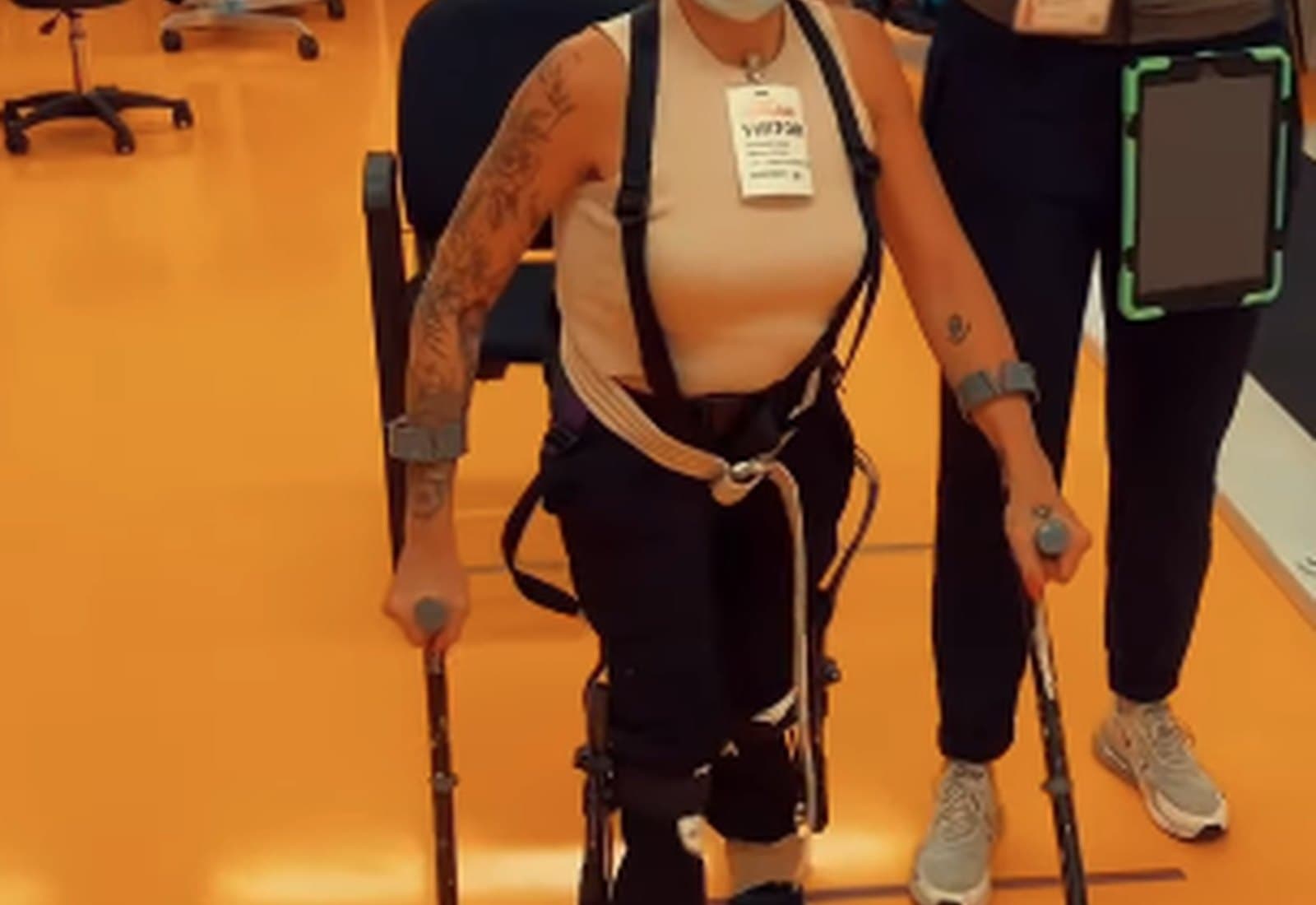
Quick answer: For neurorehabilitation exoskeleton procurement, the key decision is not which device has the most features but which system fits your patient population, clinical workflow, and reimbursement pathway. All five systems in the ExoSelect database—EksoNR, HAL Lower Limb, Atalante X, Indego, and ExoMotus M4—are active or hybrid gait-training devices with undisclosed pricing, so buyers must request formal quotes and clarify service, training, and warranty terms before committing.
Key takeaways
- All five systems are classified as medical devices with CE marking; EksoNR and Indego also hold FDA clearance.
- Peak assist force is undisclosed for every system; peak assist torque is unknown for Atalante X, Indego, and ExoMotus M4.
- Price is undisclosed across the board—budget for capital, training, service, and consumables separately.
- Weight ranges from 12.3 kg (Indego) to 65 kg (Atalante X), a critical factor for clinic space and patient handling.
- HAL Lower Limb is often offered as a treatment or lease programme, not a capital purchase.
What clinical evidence exists for each system?
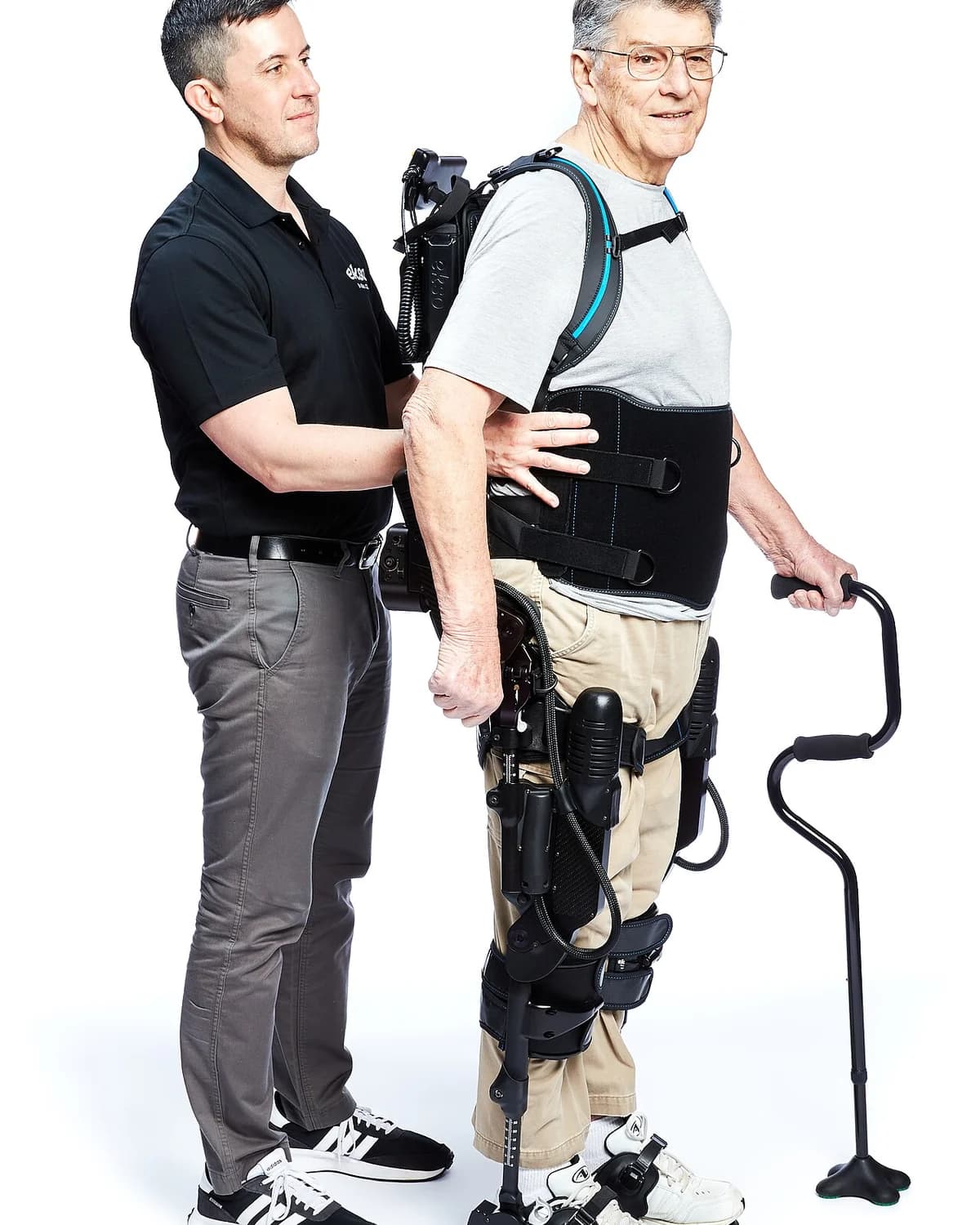
EksoNR cites published stroke and spinal cord injury rehabilitation studies. HAL Lower Limb references clinical studies in stroke, SCI, and neuromuscular conditions. Atalante X points to clinical studies in neurological rehabilitation. Indego lists peer-reviewed gait training studies. ExoMotus M4 mentions clinical rehabilitation studies in China. The database does not quantify outcomes, patient numbers, or effect sizes—buyers should request the underlying publications and assess relevance to their own patient mix.
How do the systems compare on core specifications?
| System | Maker | Drive | Weight | Speed | Battery life | Certifications |
|---|
| EksoNR | Ekso Bionics | Active | 23.6 kg | 1.1 km/h | 4 h | FDA, CE |
| HAL Lower Limb | Cyberdyne | Hybrid | 17 kg | 1.5 km/h | 3 h | CE medical, ISO 13485 |
| Atalante X | Wandercraft | Active | 65 kg | 2.5 km/h | 4 h | CE medical |
| Indego | Parker Hannifin | Active | 12.3 kg | 2 km/h | 4 h | FDA, CE |
| ExoMotus M4 | Fourier Intelligence | Active | 23.5 kg | 1.2 km/h | 3 h | NMPA, CE |
All systems support level walking; stair training is not supported by EksoNR or Atalante X, while Indego and HAL require clinical assessment for stairs. The table shows only disclosed specifications; missing data is flagged in the next section.
What the datasheet doesn't tell you
Peak assist force is undisclosed for all five systems. This matters because assist force determines how much a patient can be supported during gait and directly affects therapy intensity and patient eligibility. Without it, buyers cannot compare systems on a like-for-like basis or predict whether a device will meet the needs of higher-weight or more impaired patients.
Peak assist torque is unknown for Atalante X, Indego, and ExoMotus M4. EksoNR and HAL Lower Limb disclose 40 Nm, but for the others the absence of torque data makes it impossible to assess joint-level assistance or match the device to specific muscle weakness patterns.
Indicative price is undisclosed for every system. Clinical exoskeleton pricing is typically quoted per configuration and includes training, service contracts, and software licences. Without a price range, buyers cannot build a total-cost-of-ownership model or compare lease versus purchase options. HAL Lower Limb is often offered as a treatment or lease programme, which changes the financial calculus entirely.
Other gaps: EksoNR lists a height range of 152–193 cm but the unit is repeated in the database as "cm cm"—a data entry artefact that should be verified with the maker. Lead times vary from 8–12 weeks (EksoNR) to "contact maker" (Atalante X) or "programme-dependent" (HAL), which affects deployment planning.
Who should not choose this
Buyers seeking a single device for both clinical gait training and personal community mobility should not choose any of these systems without verifying their intended use. The database summaries describe EksoNR as therapist-supervised for inpatient and outpatient neurorehabilitation, HAL as a cybernetic assistive limb often leased, Atalante X as self-balancing for overground rehabilitation, Indego as modular for clinical and personal mobility, and ExoMotus M4 as a powered lower-limb exoskeleton for repeatable clinical gait training. If your procurement goal is personal mobility at home, only Indego explicitly mentions personal mobility, and even then clinical assessment is required. For high-throughput clinics with limited space, the 65 kg Atalante X may be impractical despite its self-balancing capability. And if you require published, quantified clinical evidence with effect sizes, none of the datasheets provide it—you must request the full clinical dossier.
What regional compliance differences matter?
EksoNR and Indego hold both FDA and CE markings, making them suitable for North America and Europe. HAL Lower Limb holds CE medical and ISO 13485 but is primarily available in Japan, Europe, and Asia-Pacific. Atalante X is CE medical only and available in Europe and North America. ExoMotus M4 holds NMPA and CE, with availability in Asia-Pacific, Europe, and the Middle East. Buyers in the US should note that only EksoNR and Indego have FDA clearance; others may require local regulatory approval or be limited to research use. Always confirm the exact regulatory status for your jurisdiction.
How should buyers structure a procurement inquiry?
Start by defining your patient population (stroke, SCI, neuromuscular), required gait functions (level walking, sit-to-stand, stairs), and throughput. Then request from each maker: a formal quote including training and service, the clinical evidence dossier, peak assist force and torque data (or a statement that it is not disclosed), lead time, and warranty terms. Use the ExoSelect comparison tool to line up specifications side by side. For a structured inquiry, contact our selection desk.
FAQ
Which neurorehabilitation exoskeletons are FDA cleared?
Only EksoNR and Indego hold FDA clearance according to the database. Others may be available under different regulatory pathways.
Can I lease a neurorehabilitation exoskeleton instead of buying?
HAL Lower Limb is often offered as a treatment or lease programme rather than a capital purchase. Other makers may offer lease options on inquiry.
What is the typical lead time for these systems?
EksoNR lists 8–12 weeks; HAL is programme-dependent; Atalante X and Indego require contacting the maker or regional distributor; ExoMotus M4 requires contacting the regional distributor.
Next step
Request a documented peak assist force and torque specification from Ekso Bionics, Cyberdyne, Wandercraft, Parker Hannifin, and Fourier Intelligence, and compare their responses using the EksoNR, HAL Lower Limb, Atalante X, Indego, and ExoMotus M4 pages. For a structured procurement checklist, visit our inquiry page.
 ExoSelect research